For clinicians

The cognitive visit, assembled before the patient arrives.

CHAMP gathers a structured history and the family's observations ahead of time, so you walk into the room with the picture already in front of you. Less hunting through the chart. More of the visit spent on the person.

Request a walkthrough See the product
The squeeze

A thorough cognitive workup rarely fits in the time you have.

A proper cognitive assessment asks for history, function, medications, mood, safety, and a care plan the family can actually follow. Gathering all of that inside a single visit is hard, and the most useful detail often lives with the people who see the patient every day, more than in the chart.

CHAMP moves that gathering out of the visit and into the weeks before it, in a structured form you can review at a glance.

How it works

Four steps, most of them done before you meet.

1

The family builds the picture at home

Guided prompts collect history, daily function, medications, sleep, mood, and the changes the family has noticed, in their own words, over the weeks leading up to the appointment.

2

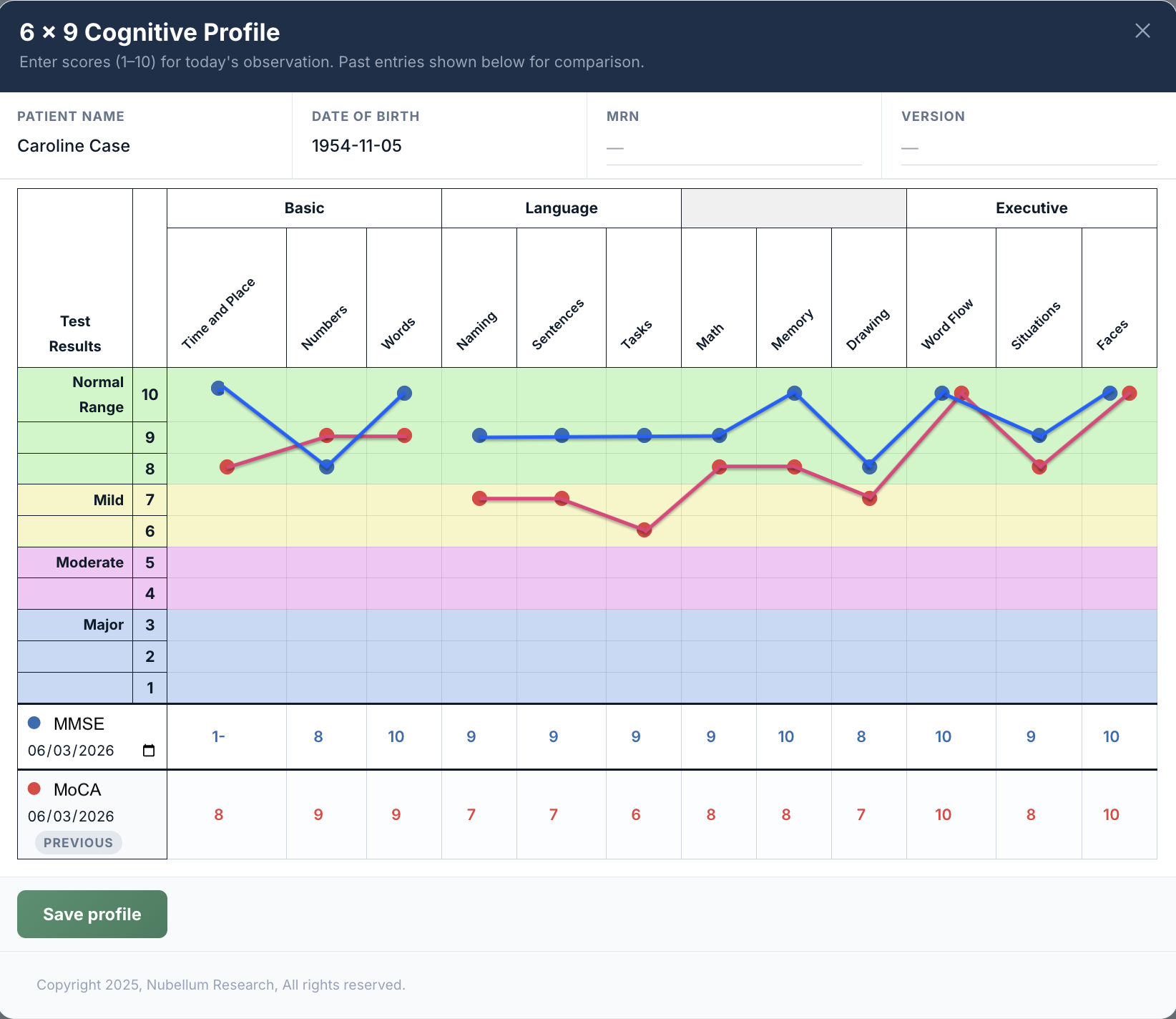
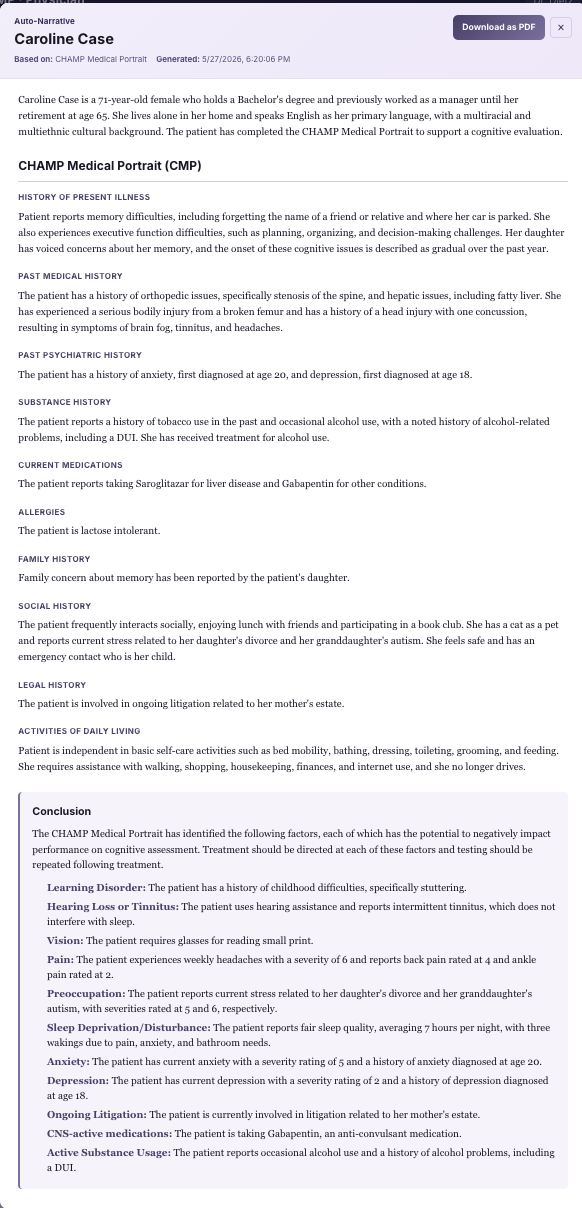
CHAMP organizes it into a structured summary

The input arrives as a clean, reviewable summary mapped to the domains a cognitive visit covers, ready to read at a glance.

3

You lead the visit with the picture in hand

You spend the appointment confirming, examining, and deciding, the work only a clinician can do, with the backstory already in hand.

4

The care plan goes home with the family

Your plan is shared back into the family's record, so the people doing the day-to-day caregiving know what to watch and what to do next.

Documentation

Built around the cognitive assessment and care-plan visit.

CPT 99483 covers a structured cognitive assessment and care planning service. It asks for a long list of elements in one encounter. CHAMP is designed to help you have those elements gathered and documented.

Gathered ahead

The history elements

Cognitive and functional history, medication review, and the safety and caregiver context the visit is supposed to capture, collected before you sit down.

Organized for review

A documentation trail

Inputs and your notes are organized into a summary you can review and carry into your own record, supporting the documentation the service requires.

Carried forward

A care plan that travels

The plan you set is shared with the family so it lives past the visit, which is the point of the encounter in the first place.

A note on coding. CHAMP helps you gather and document the elements of a cognitive assessment and care-planning visit. It does not bill on your behalf, guarantee reimbursement, or make coding decisions. Whether a given encounter meets the requirements for 99483, or any code, is your clinical and billing judgment.
Where CHAMP fits

A better starting point, built around your judgment.

CHAMP assembles, organizes, and tracks, then hands it to you. The assessment is yours. The diagnosis is yours. The care plan is yours. CHAMP's job is to make sure you have everything in front of you when you do that work, and to carry your decisions back to the people who will live them out.

For your practice

See what a pre-assembled cognitive visit feels like.

We will walk you through CHAMP with your workflow in mind, no commitment. Tell us a little about your practice and we will set up a time.