You can’t be there every day, and “I’m fine” tells you nothing. CHAMP turns a few minutes of staying in touch into a clear picture of how your parent is doing, so you catch the small things early and trade worry for knowing. It never feels like work. It feels like staying close.


Scan with your iPhone camera
Not a list of features. Six real powers you have wanted for years, and a reason to celebrate the night you finally have them.
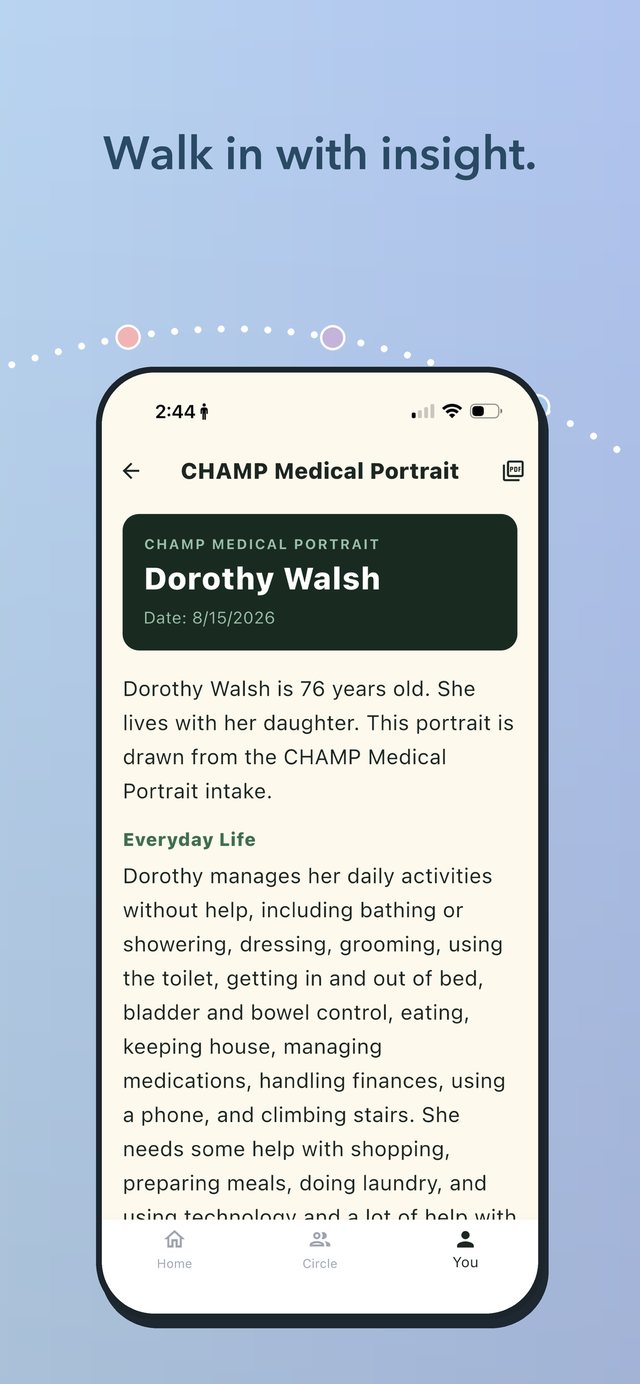
Open your phone and see the truth, gently, instead of waiting on “I’m fine.”
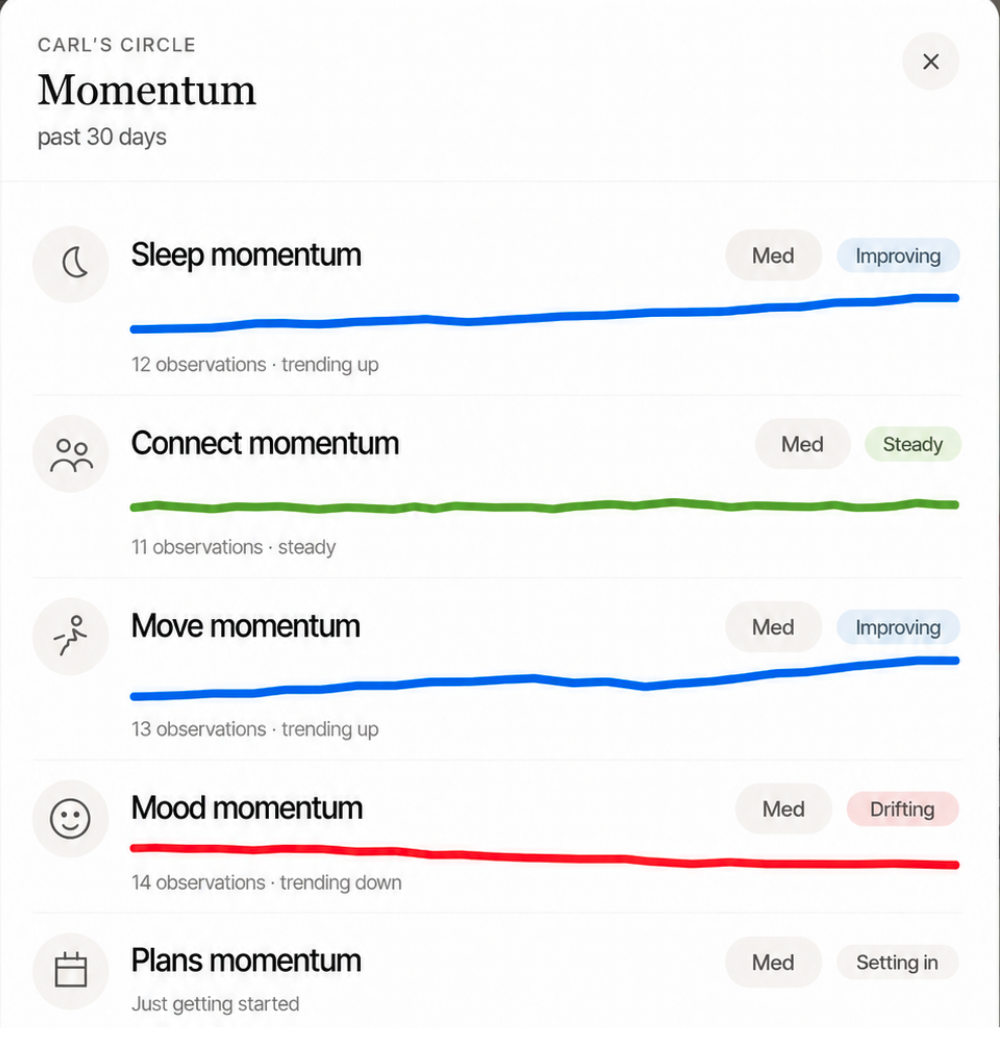
A dip in sleep, a missed week of pills, a lonely stretch, while there is still time to act.
Everyone sees the same picture and shares the load, so no one carries it alone.
The real between-visit picture in one place, so the appointment starts further along.
Shared moments and gentle prompts, so it feels like caring, not like checking up.
Real, measured action on the things that matter, instead of helpless worry.
The real app, a real week with a mom named Eveline. Everything you just read, proven on screen.
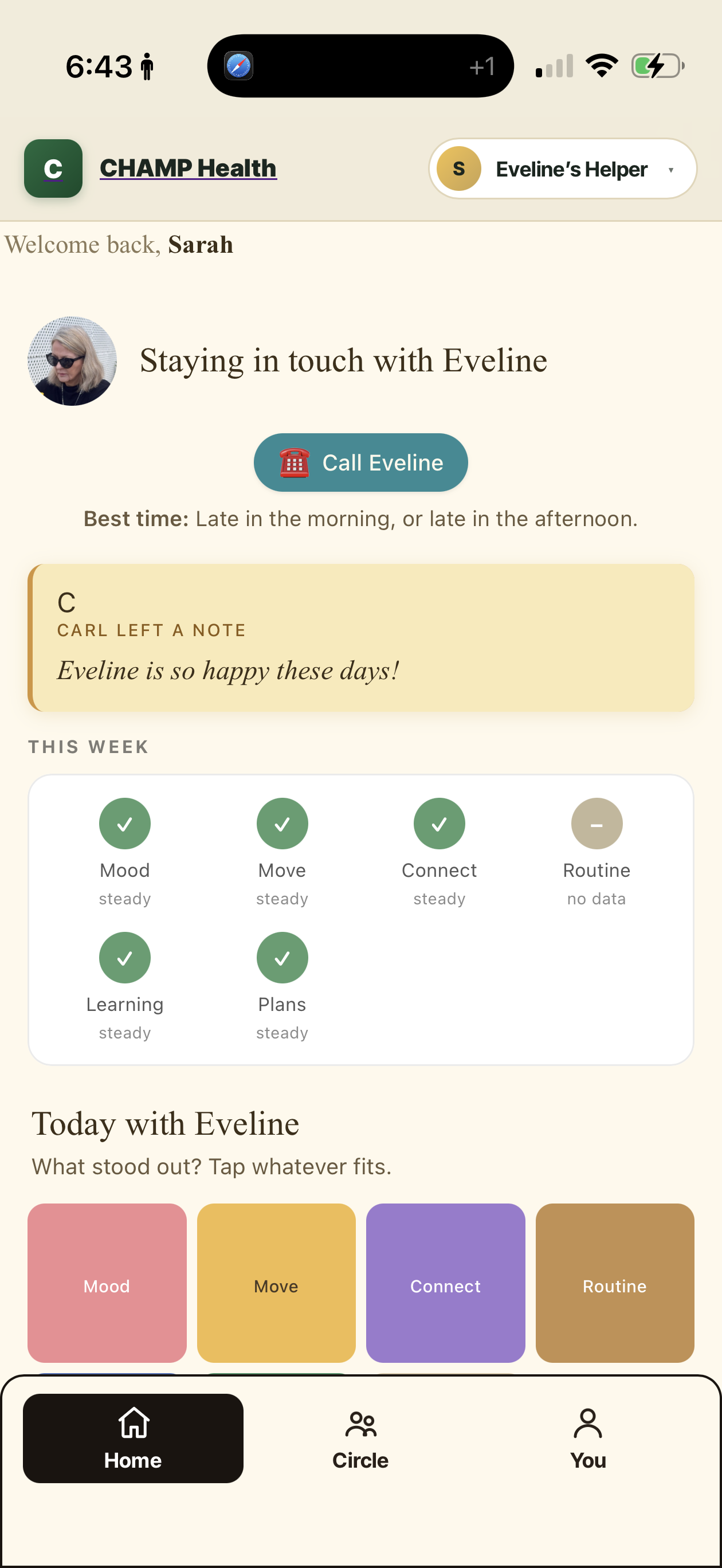
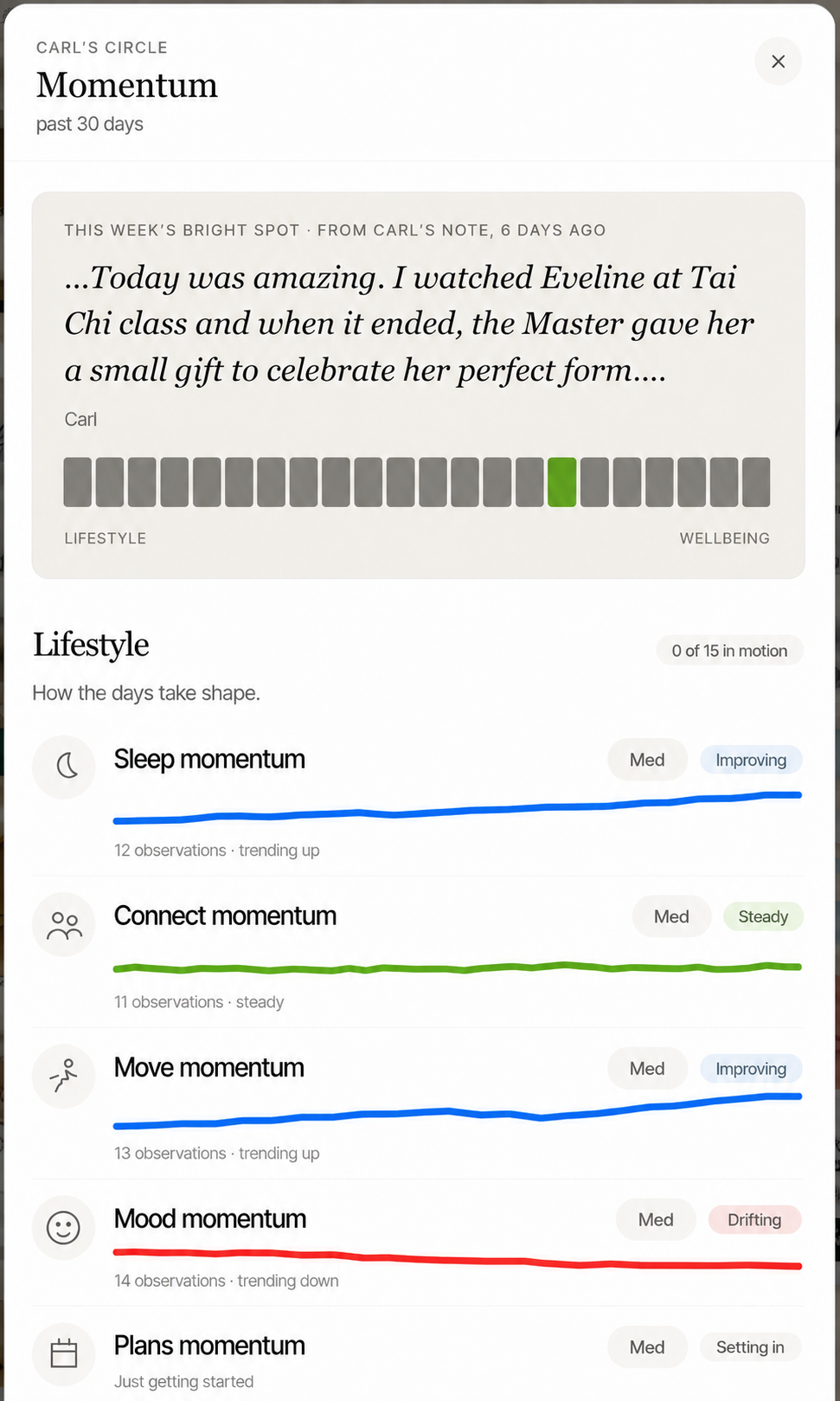
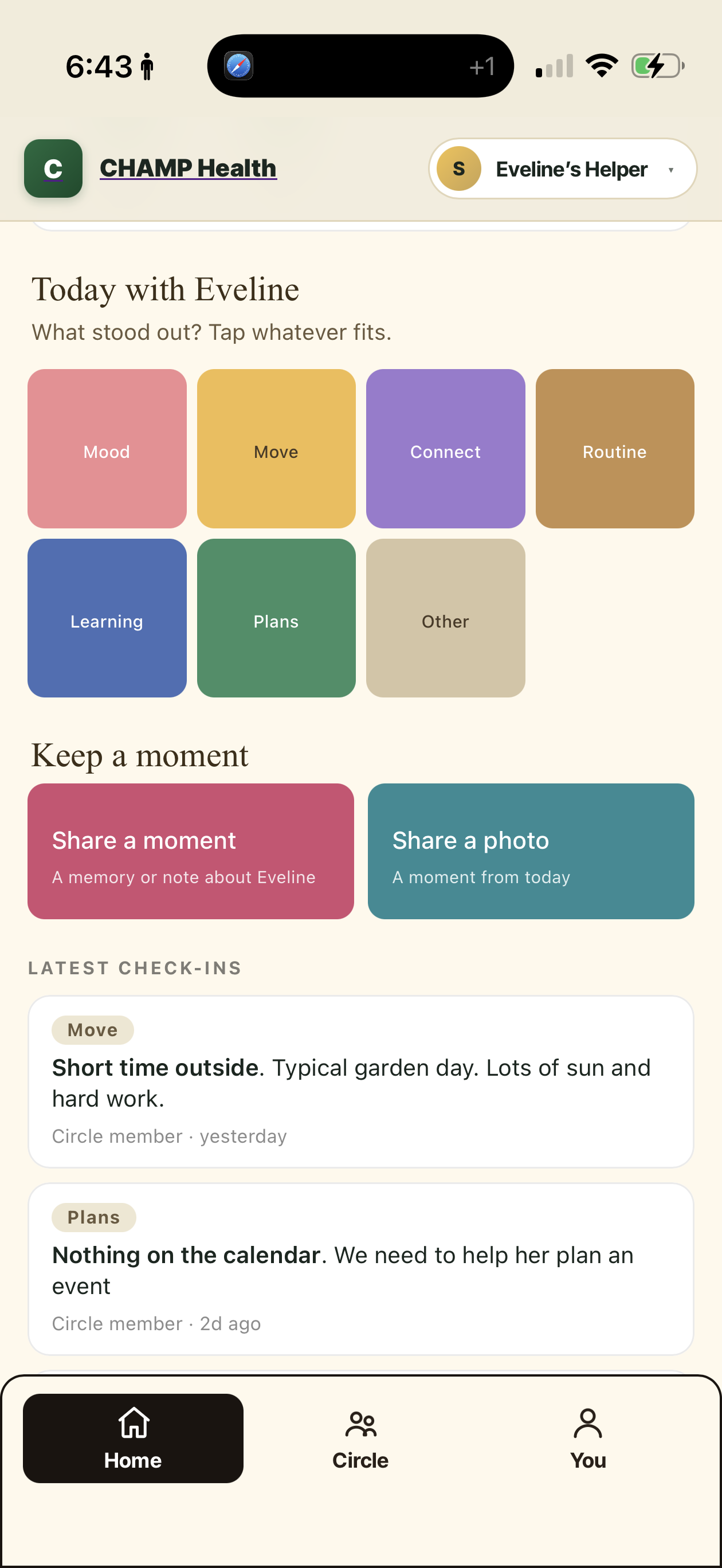
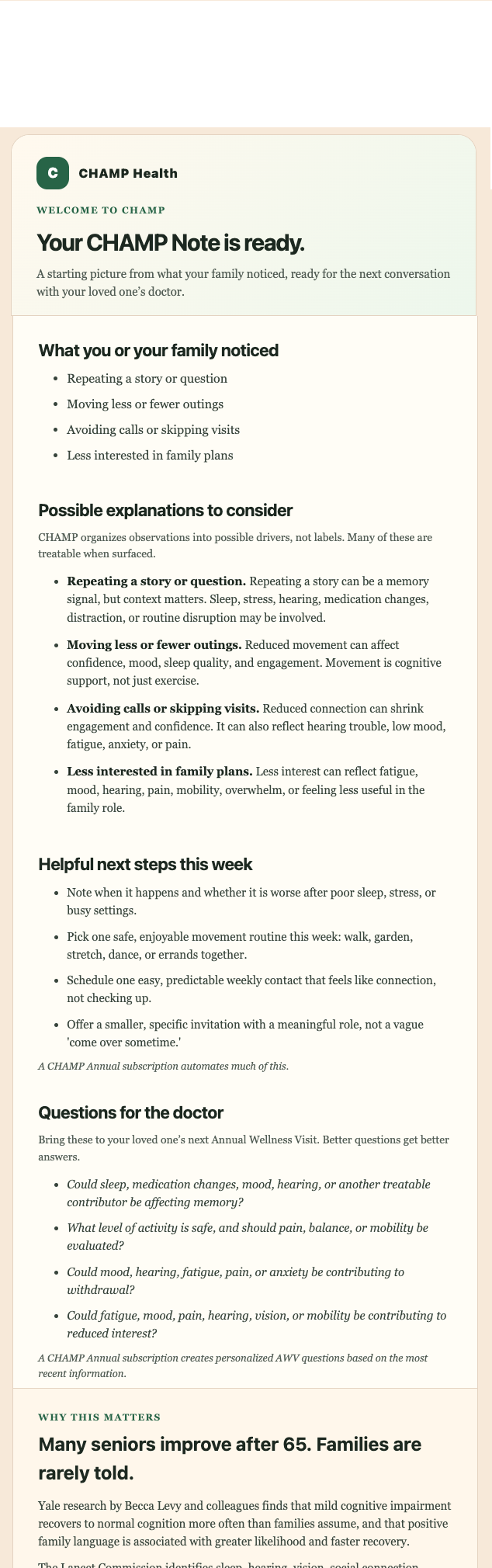
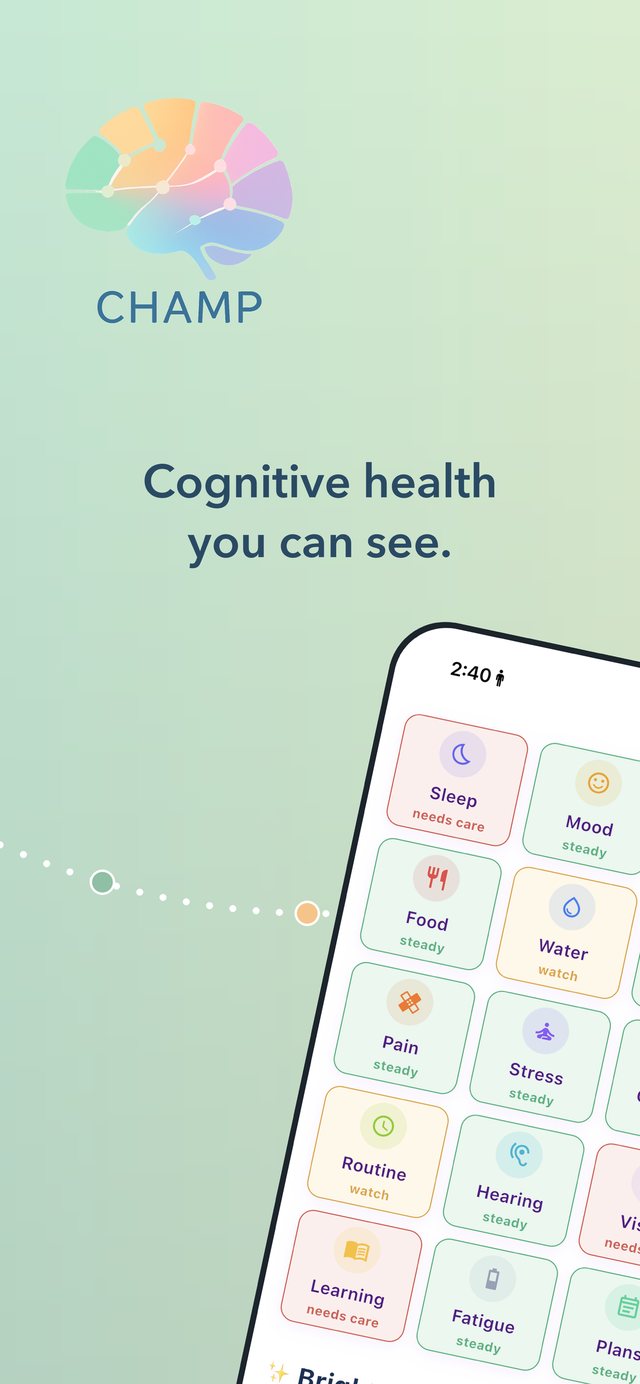
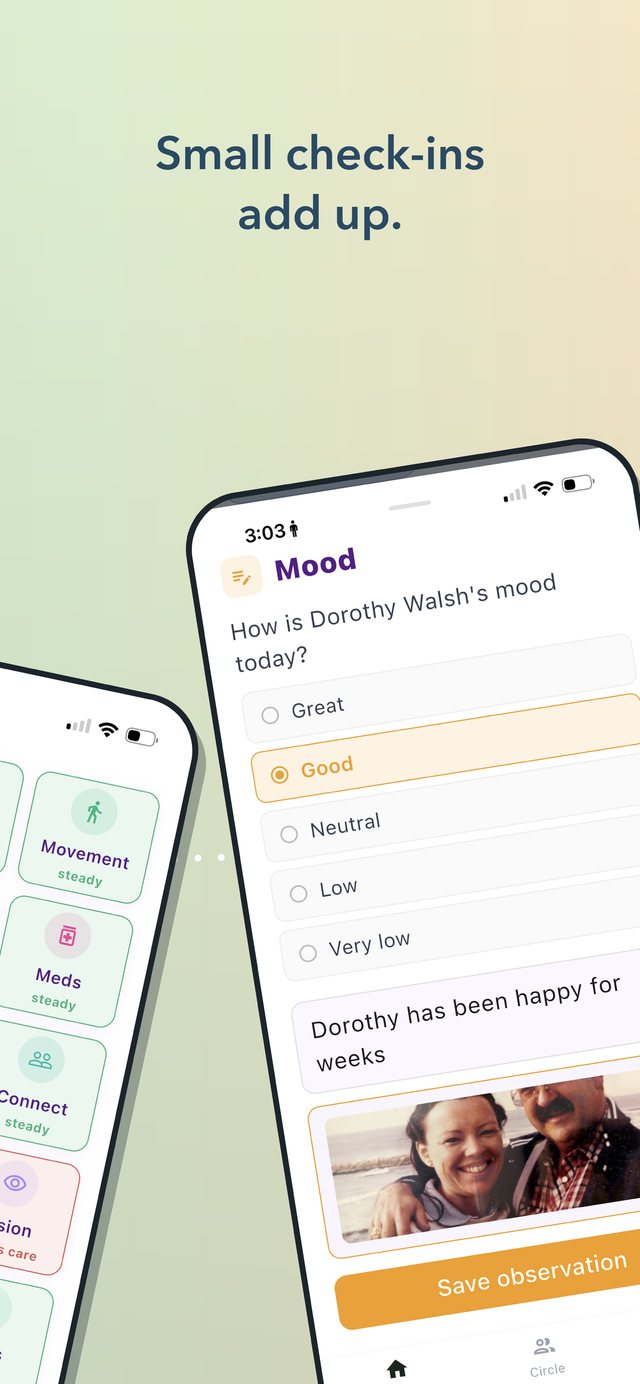
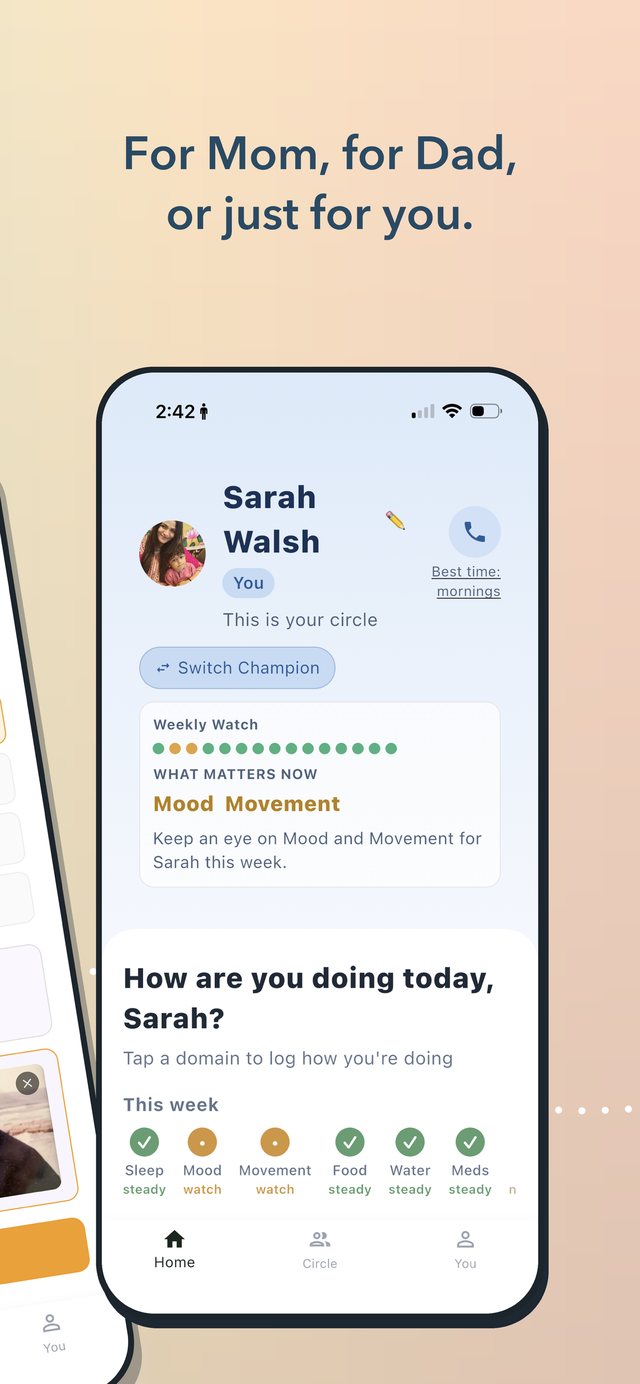
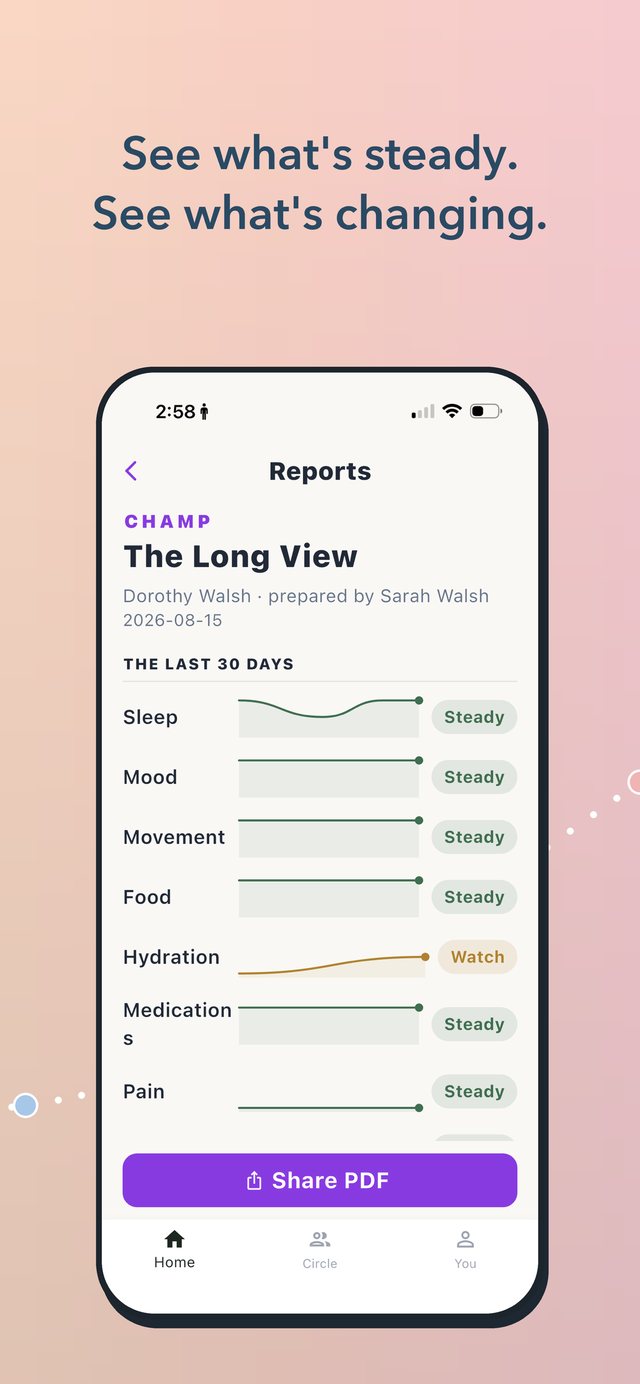
Eveline’s week in seven seconds: mood steady, sleep worth a look, medications on track, and a note that she is happy these days. The truth, gently, in place of one word on the phone.
When sleep slips or a few doses are missed, CHAMP raises a quiet, kind heads-up, while there is still time to act, long before it becomes the call you dread.
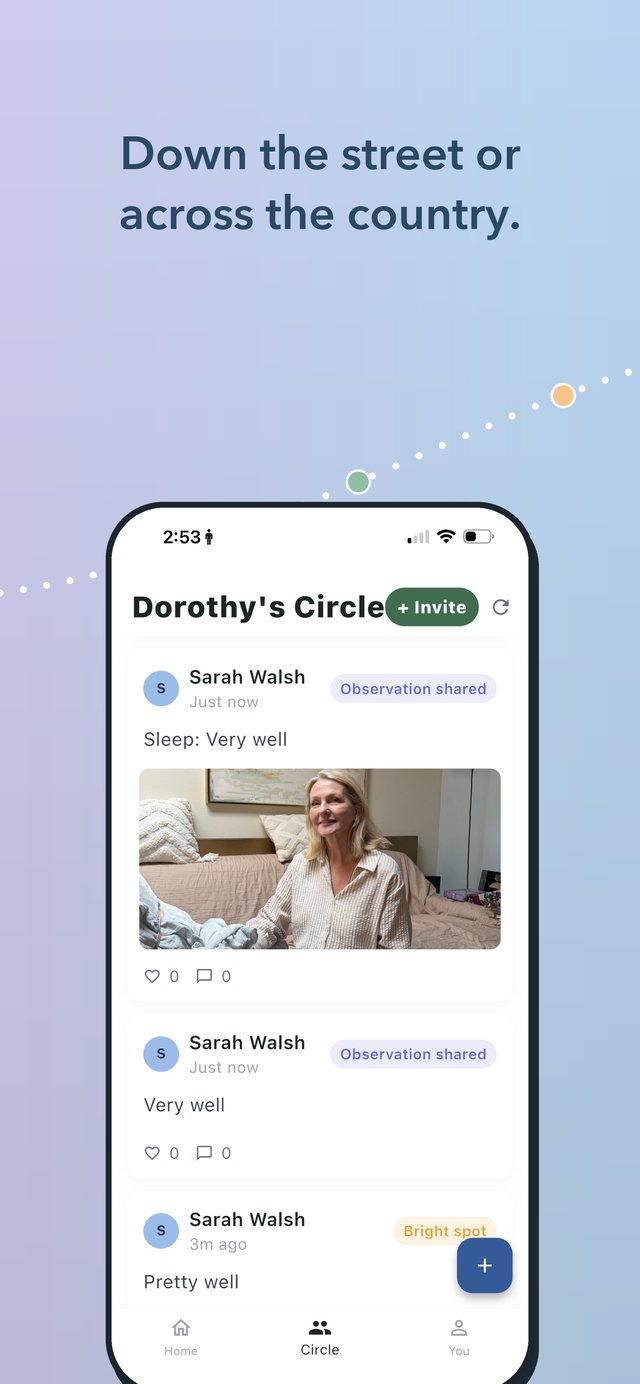
Siblings, a spouse, a trusted friend, all seeing the same updates and sharing the caring, so no one carries it alone.
You share as much or as little as you want before the visit. Medications, history, and the real between-visit picture arrive organized, so the doctor sees the whole person and the time goes to what matters.
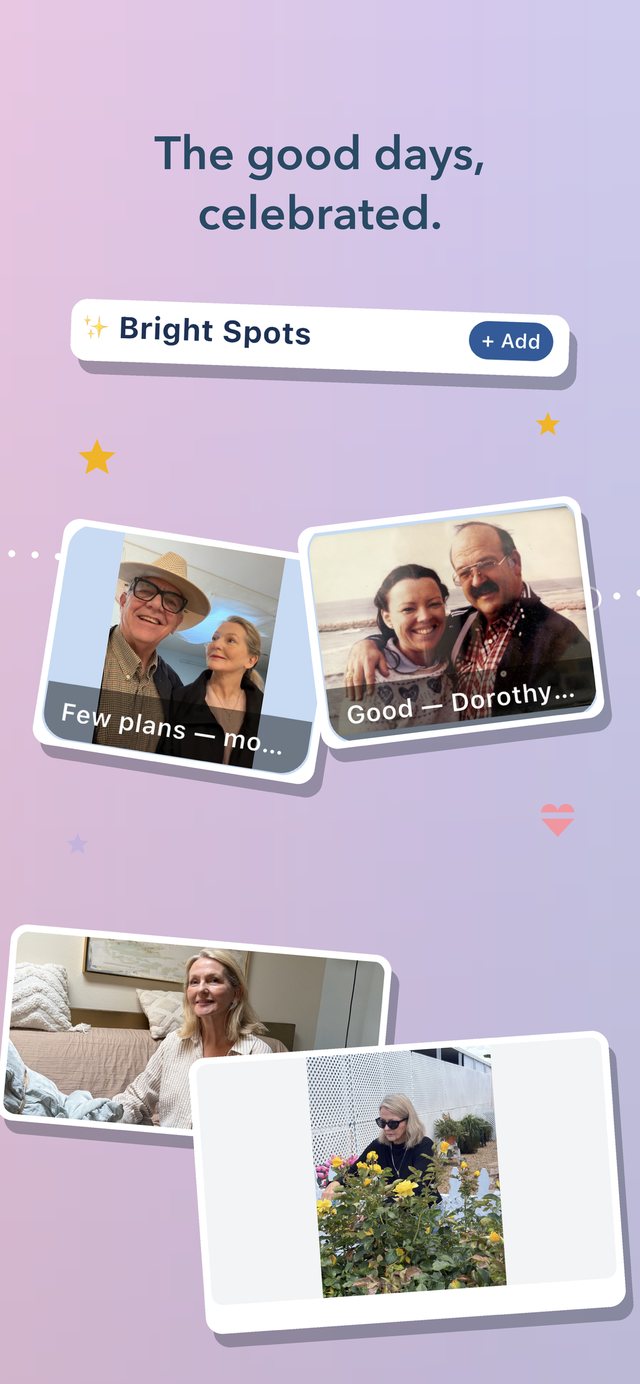
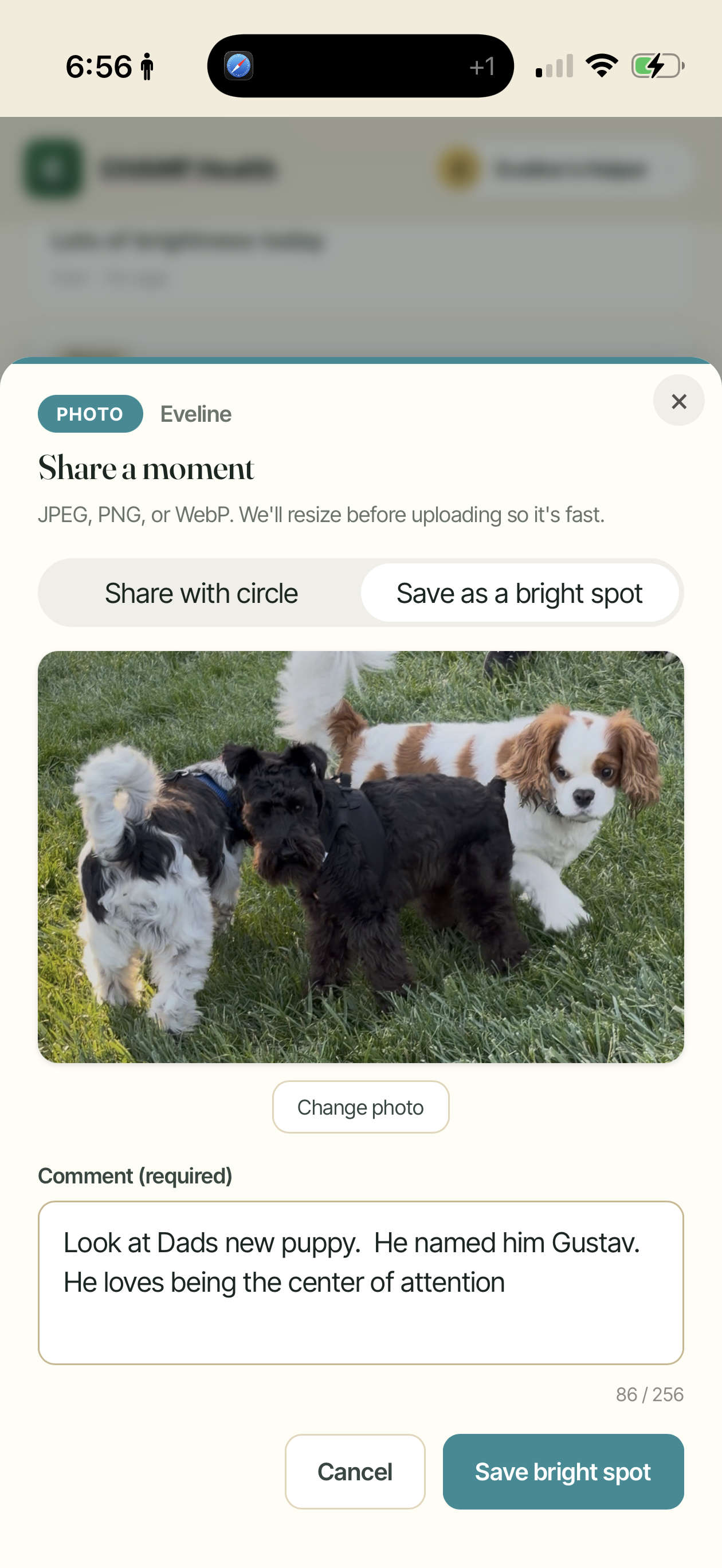
The new puppy, the garden she is proud of, the joke she always tells. Saved and shared, building into a keepsake you will be glad you started tonight.
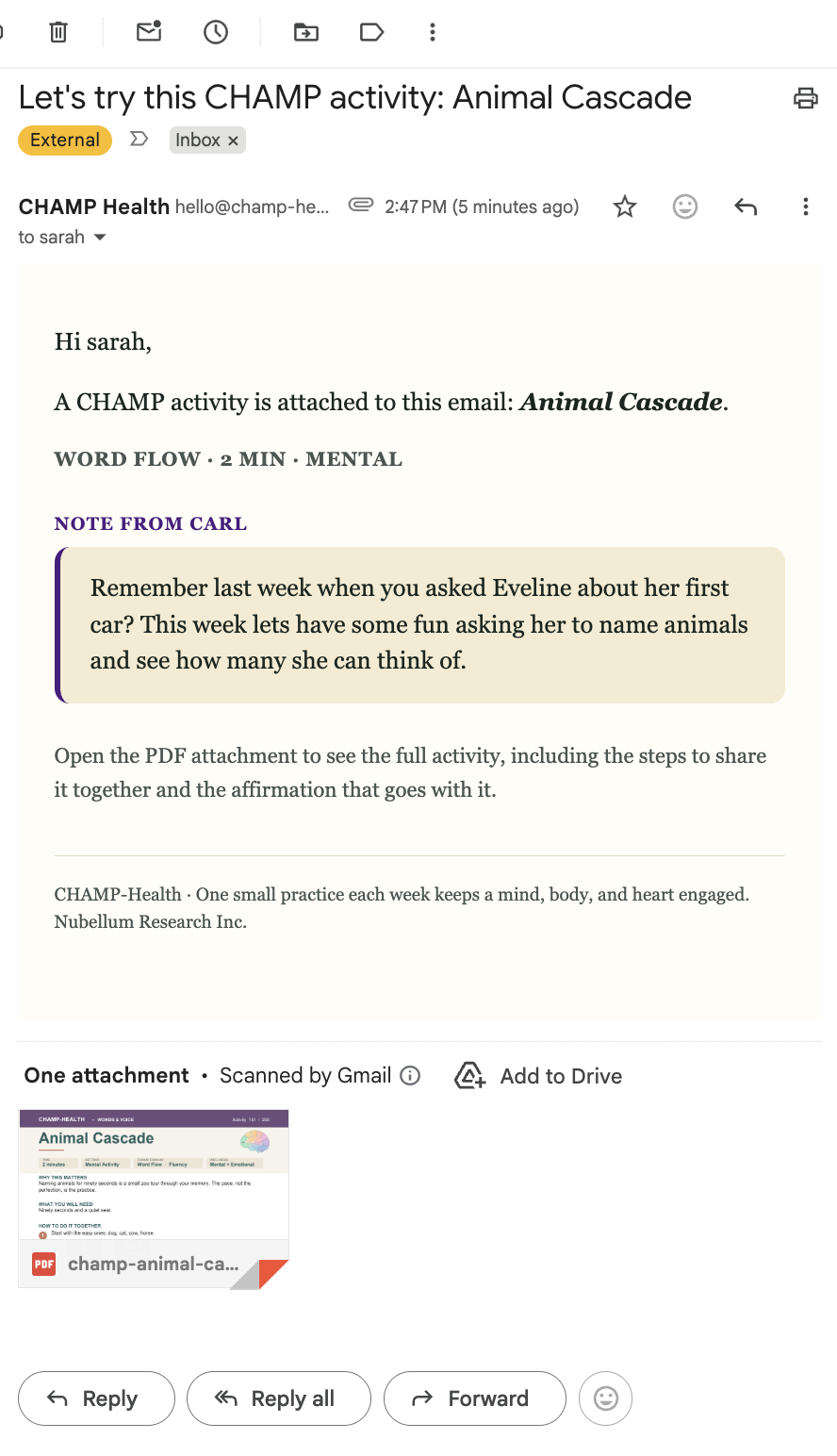
One easy, research-backed thing to do together today. Small, joyful, and quietly protective, the kind of action that compounds week after week.
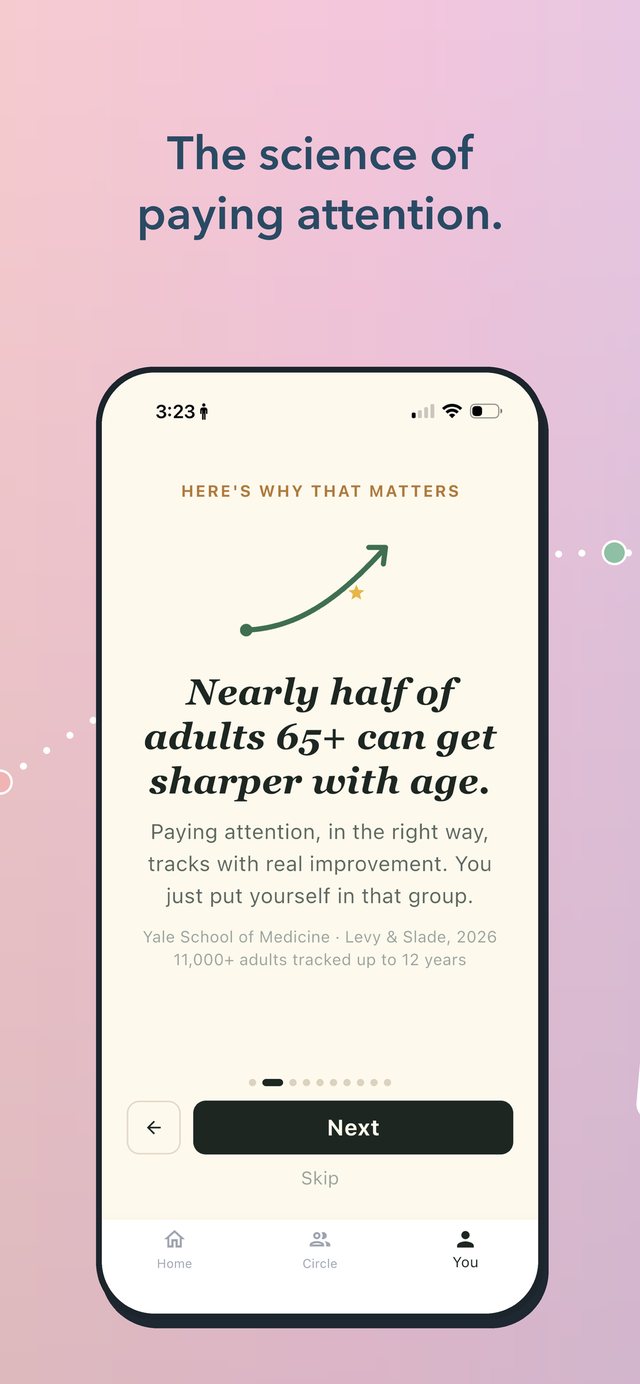
Attention, routine, mood, sleep, time together: the very things that bring you closer are the things the strongest research links to a mind kept sharp and a life lived longer. By making them easy and daily, CHAMP turns staying close into quiet, continuous protection, no appointment, no effort, no feeling of work.
This is the quiet prophylaxis: the daily closeness that may help guard her mind, even reverse an early slip, happening on its own while you simply stay in touch. CHAMP helps you notice and act on exactly these everyday factors, alongside her doctor. It does not diagnose or treat.
This single decision may be the most important act of care you ever make.
Or scan with your iPhone camera
